Choosing Fine Art Photography and Wall Art Decor for Australian Homes and Apartments
Wall Art That Works with Modern Australian Homes and Apartments
Choosing artwork for an Australian home is slightly different from choosing artwork for a room in a decorating book.
Many Australian homes and apartments are shaped by strong natural light, pale walls, open-plan living, timber floors, balconies, gardens, coastal air, city views or a connection to the outdoors. The room may already have a lot of space and atmosphere before a single artwork is added. That changes the role of wall art.
In some interiors, art is another decorative layer. In many Australian homes, especially modern apartments and open-plan houses, one strong artwork can become the visual anchor that gives the room depth, mood and personality.
Fine art photography works especially well in this setting. A good photographic print is not just an image of a place. It can bring distance into a small room, calm into a bedroom, warmth into a neutral interior, or a sense of memory and atmosphere into a living space.
The key is not simply to ask, "Does this match my sofa?" A better question is: What should this artwork make the room feel like?
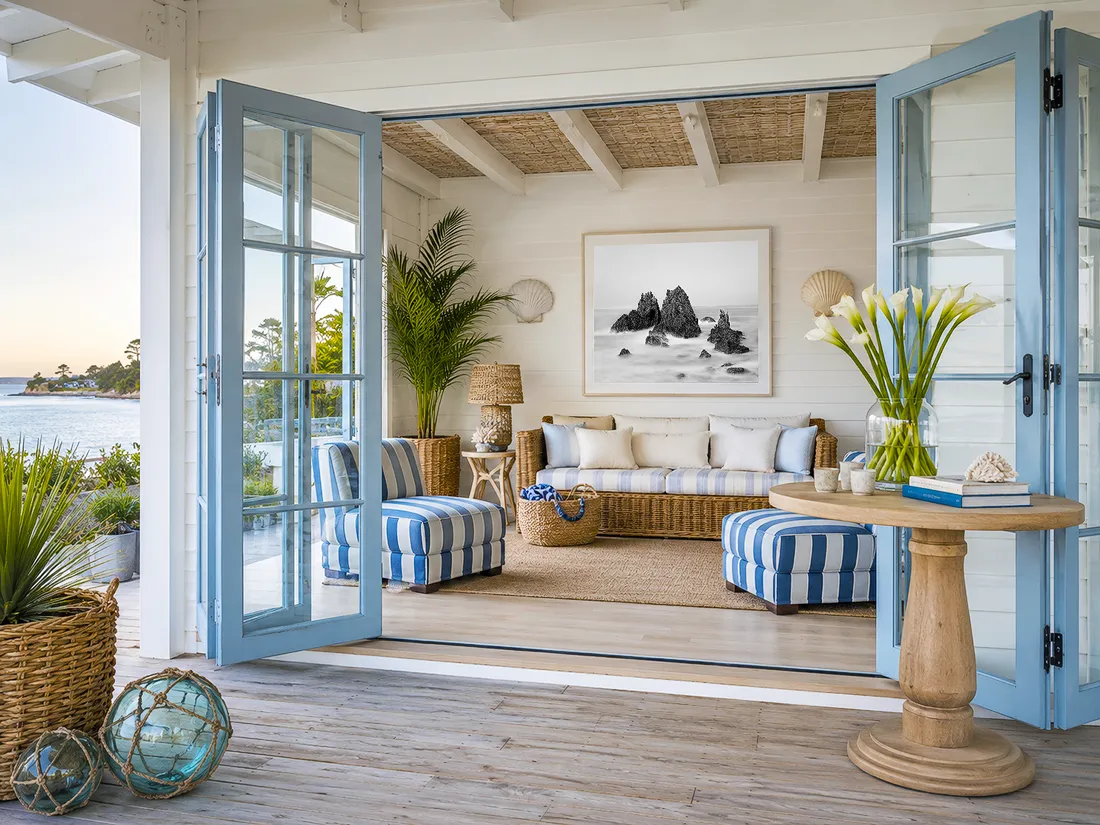
A relaxed coastal Australian home showing how black and white fine art photography can anchor a light, beach-inspired interior with natural textures, soft whites and blue accents.
Start with the room, not the artwork
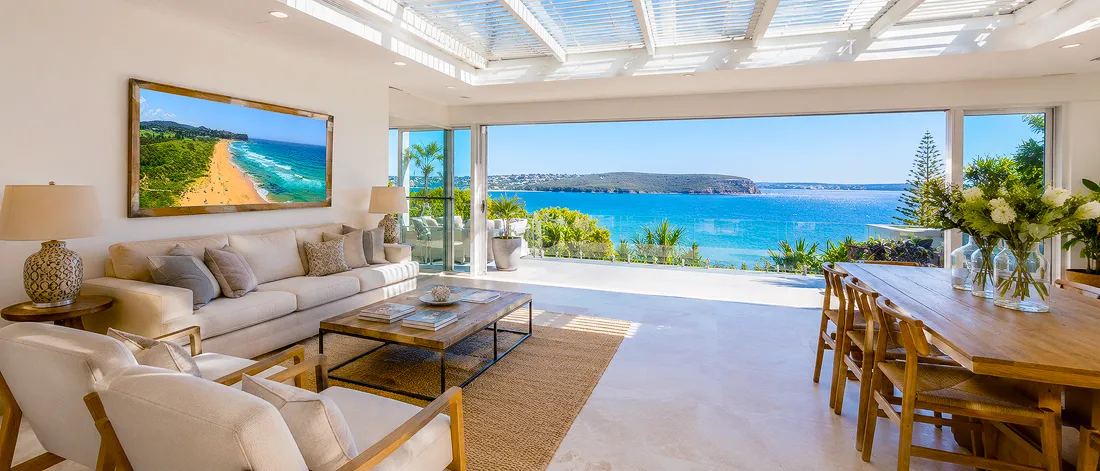
A sunlit coastal Australian home where beach photography connects the interior with the ocean view outside, adding colour and a strong sense of place to a relaxed neutral living space.
Before choosing a fine art print, look at the room itself.
How much natural light does it receive? Is the wall large and empty, or broken up by windows, doors and furniture? Will the artwork be seen from across an open-plan living area, from the bed, from a dining table, or while walking through a hallway? Does the room already have a strong outdoor view, or does it need the artwork to create a sense of depth?
These questions matter because the same photograph can behave very differently in different rooms.
A dramatic sunset over Sydney Harbour might feel powerful and cinematic in a living room, but too energetic for a quiet bedroom. A soft blue seascape may be perfect above a bed or in a coastal apartment, but too gentle for a room that needs a strong focal point. A black-and-white city photograph may sharpen a hallway or home office, while a warm sandstone landscape can soften a modern white interior.
The room gives you the brief. The artwork answers it.
Choose mood before colour
One of the most common mistakes people make when choosing wall art is starting with colour matching.
There is nothing wrong with considering colour. Artwork should not look completely disconnected from the room. But choosing art only because it contains the same blue as the cushions or the same beige as the rug usually leads to dull, decorative choices.
Mood matters more.
Do you want the room to feel calm, open and coastal? Warm and earthy? Clean and minimal? Dramatic and cinematic? Soft and romantic? Urban and graphic? Quiet and meditative?
Once the mood is clear, colour becomes easier.
A calm bedroom may suit soft blues, mist, pale sand, quiet water or gentle skies. A living room may handle stronger contrast, richer colour or a more dramatic composition. A home office might benefit from clean lines, architectural photographs or spacious landscapes that give the eye somewhere to rest. A dining room can often take something more expressive, because artwork there becomes part of conversation and atmosphere.
A print does not need to match the room literally. It needs to belong emotionally.
Why fine art photography works so well in Australian interiors
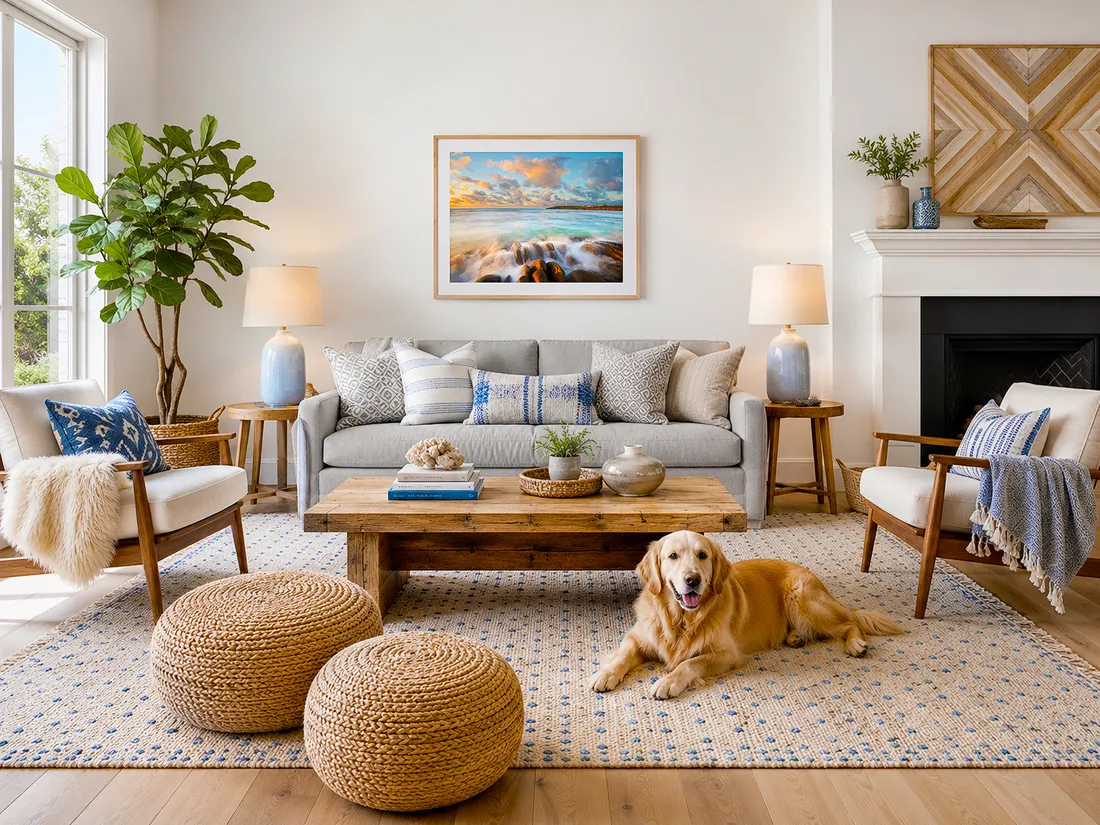
A relaxed Australian living room showing how colourful coastal photography can lift a neutral interior, adding warmth, movement and a natural focal point above the sofa.
Australian interiors often have a certain visual restraint: white or off-white walls, timber floors, simple blinds, neutral furniture and large windows. This can be beautiful, but it can also become a little flat if every surface stays too safe.
Fine art photography adds depth without needing heavy decoration.
A landscape photograph can visually open a room because it gives the eye somewhere to travel. A coastal print can bring air and light into an apartment. A cityscape can add structure and rhythm to a modern interior. A black-and-white photograph can make a room feel more refined and timeless. A travel photograph can add memory and personal connection without becoming clutter.
This is where photography has an advantage over generic wall décor. It can carry a real place, real light and real atmosphere.
A photograph of Bondi at sunrise is not just "blue wall art". It may suggest early morning quiet, salt air, summer, movement, space and memory. A photograph of the Blue Mountains is not simply "green and misty". It can make a room feel cooler, slower and more contemplative. A Sydney Harbour print may bring energy and recognition, but also elegance and structure.
Good fine art photography gives the room a centre of gravity.
Australian light changes everything
Australian light is strong. In many homes, especially in Sydney, Brisbane, Perth and coastal towns, rooms can be very bright for part of the day. That is wonderful for living, but it matters when choosing and placing artwork.
A glossy print placed opposite a large window may reflect too much light. A very dark image on a bright wall may need careful placement or good evening lighting. A pale, low-contrast image may look beautiful in soft light but become washed out in direct sun. A highly saturated image may sing in a neutral room, but fight with strong afternoon glare.
Before choosing a print, watch the wall for a day.
Does morning sun hit it directly? Does the room become harsh in the afternoon? Will the artwork be seen mostly in daylight, in evening light, or both? Is there a window opposite the wall that may create reflections?
For bright rooms, matte or low-reflection finishes can be worth considering. For darker rooms, lighter photographs with sky, water, mist or open space can help lift the atmosphere. For rooms with warm timber floors or natural oak furniture, earthy tones, sandstone, soft gold, muted green and warm coastal light can feel especially natural.
The best artwork does not fight the light in the room. It works with it.
Scale matters more than most people think
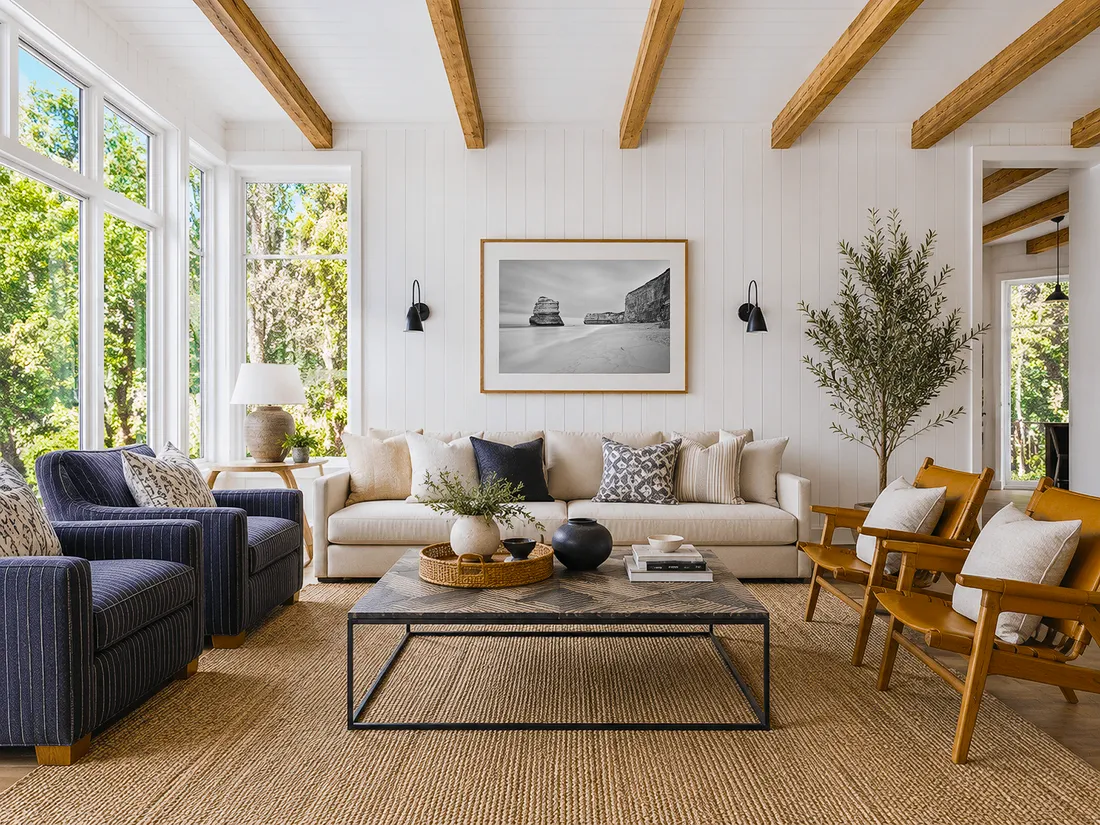
A modern coastal Australian living room showing how black and white landscape photography can add calm structure to a bright interior with timber beams, natural textures and neutral furniture.
Many people buy art too small.
This is especially noticeable in modern Australian homes and apartments, where walls are often clean, open and visually simple. A small print on a large white wall can look accidental, even if the photograph itself is beautiful.
A useful starting point is that artwork above a sofa, bed, console or dining setting should usually be around two-thirds of the width of the furniture beneath it. It does not need to be exact, but the artwork should feel visually connected to the furniture rather than floating alone on the wall.
For example, above a three-seater sofa, a single large horizontal print will often look more confident than a small framed image. Above a queen or king bed, a wide landscape, panoramic seascape or calm triptych can help the room feel settled. On a large feature wall, one oversized photographic print can sometimes feel calmer than several smaller pieces.
This is slightly counterintuitive, especially in apartments. People often think small rooms need small art. But a room can feel more spacious when it has one strong, well-scaled artwork rather than a scatter of small pieces. Large landscape photography can create a sense of depth, almost like another window.
The point is not to buy the biggest possible print. The point is to choose artwork that has enough presence for the wall.
Statement piece or gallery wall?
A single large artwork and a gallery wall do different jobs.
A single large photographic print works beautifully when the room is already clean, bright, architectural or minimal. It gives the space focus without adding visual noise. This is often the strongest choice above a sofa, bed, dining setting or console.
A gallery wall works better when the home is more collected, personal or eclectic. It can be wonderful in a hallway, staircase, study, entryway or older home with more character. It also works well when the aim is storytelling: family photographs, travel images, small prints, black-and-white work, sketches, maps or collected pieces from different places.
For many Australian apartments, a good compromise is to use one larger statement print in the living room or bedroom, then create a smaller gallery moment in the hallway or entry. The main rooms stay calm and spacious, while the circulation spaces carry more personal detail.
Think of it this way:
A large print creates stillness.
A gallery wall creates rhythm.
Both can be right. They simply create different feelings.
Choosing artwork for living rooms
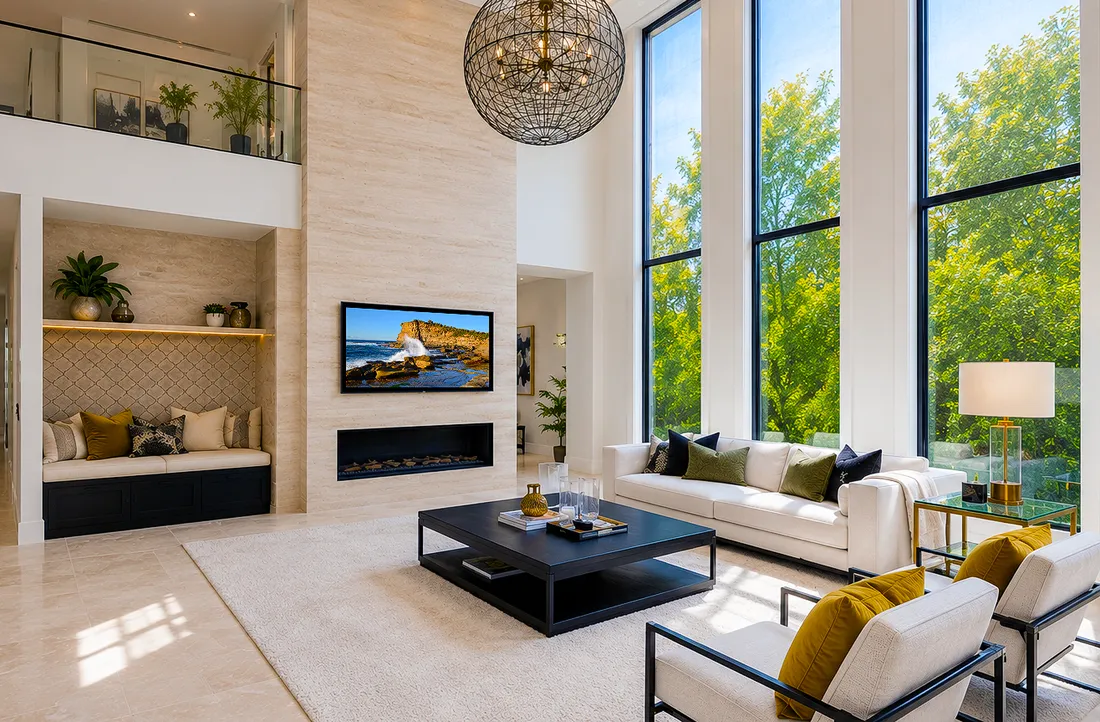
A bright luxury Australian living room showing how coastal photography can add colour and energy to a refined neutral interior while complementing natural light, greenery and modern architectural details.
The living room usually needs the strongest artwork in the home.
This does not always mean the loudest image. It means the piece with enough scale, presence and atmosphere to hold the room. In an open-plan Australian living area, the artwork may be seen from the kitchen, dining area, hallway and balcony doors. It needs to work from a distance.
Large landscape photography is a natural fit here. Coastal scenes, Sydney Harbour, dramatic skies, architectural city views, desert landscapes, eucalyptus country, sandstone cliffs and wide ocean horizons can all work well, depending on the mood of the home.
For a calm living room, choose open space, soft light, water, sky or gentle tonal transitions.
For a more dramatic room, choose stronger contrast, storm light, sunrise colour, city lights or a bold composition.
For a refined contemporary room, consider black-and-white photography, minimal seascapes, architectural details or restrained colour.
Above a sofa, avoid artwork that is too narrow. The print should feel anchored to the sofa, not like a postage stamp above it. Leave enough breathing space between the sofa and the artwork, but not so much that the two feel unrelated.
If you are planning artwork for your main living space, it can also help to think about the room as a whole: sofa placement, wall size, light, furniture scale and the mood you want the space to hold. I cover this in more detail in my guide to Decorating Your Living Room, including how wall art can help turn a living area from simply furnished into something more personal, balanced and complete.
Choosing artwork for bedrooms
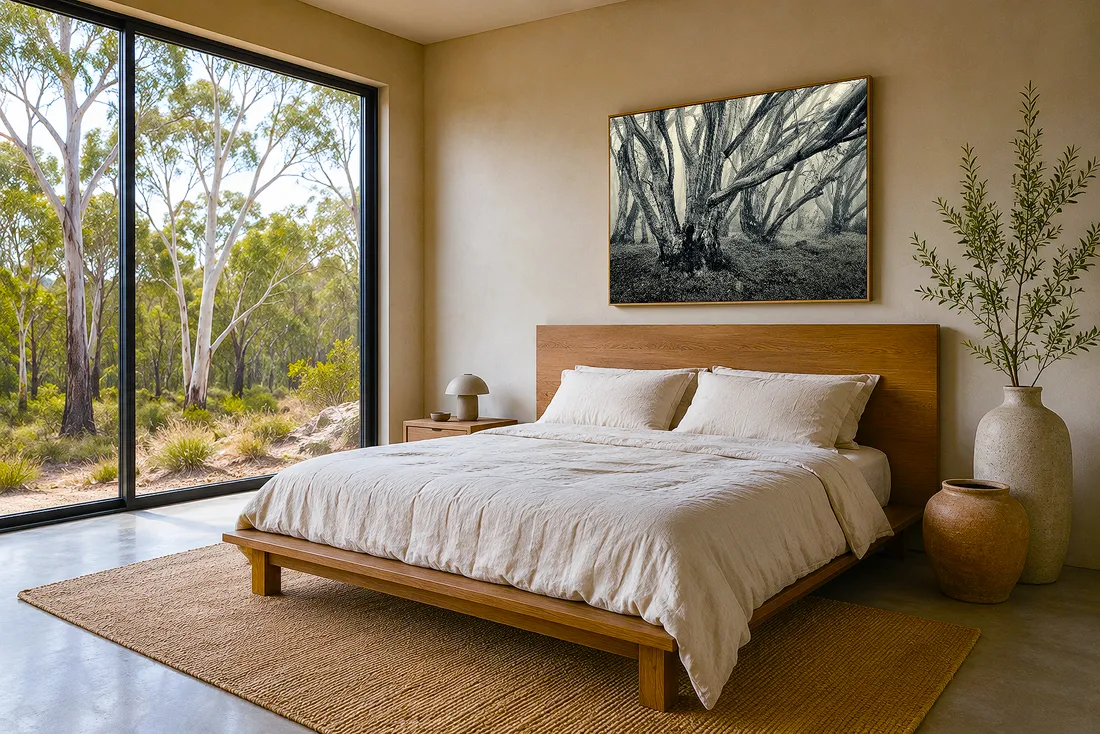
A calm Australian bedroom showing how black and white forest photography can echo the native bushland outside, creating a peaceful connection between the interior and the surrounding landscape.
Bedroom art has a different job.
It should usually calm the room down rather than wake it up. That does not mean it has to be bland. It means the image should support rest, privacy and retreat.
Soft coastal photography works very well in Australian bedrooms: pale blue water, quiet beaches, misty mornings, soft skies, gentle clouds, distant horizons. So do minimal landscapes, still water, muted forest scenes and warm evening light.
Avoid choosing a bedroom print only because it is impressive. Some images are beautiful but too energetic for sleep. A dramatic red sunset, a high-contrast cityscape or a very busy travel scene may be better in a living room, dining room or hallway.
Above a bed, horizontal artwork usually works best because it echoes the shape of the bedhead. The print should be wide enough to feel connected to the bed, but not wider than the bed itself. If the bedhead is high, hang the artwork a little higher. If there is no bedhead, the artwork may need to sit slightly lower to visually anchor the bed.
The bedroom is where fine art photography can become quiet luxury: not loud, not trendy, not decorative filler, but a daily atmosphere.
Bedroom artwork has a slightly different role from living room artwork. It is less about making a public statement and more about creating a private atmosphere you want to return to at the end of the day. For more ideas on choosing calming bedroom wall art, working with bed size and creating a restful space, see my guide to Decorating Your Bedroom.
Choosing artwork for apartments
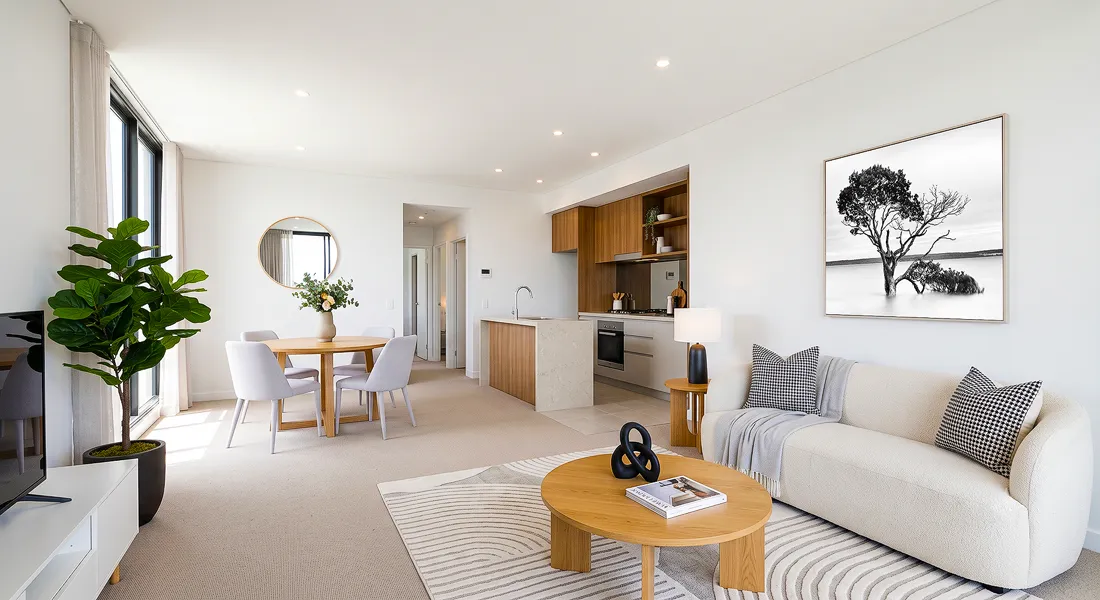
A bright modern Australian apartment showing how black and white coastal photography can bring character and a sense of calm to an open-plan living space without overwhelming the neutral interior.
Apartments need a little more discipline.
Wall space is often limited. Rooms may be open-plan. Hallways may be narrow. The same wall may be visible from the living room, kitchen and entry. Because of that, every artwork has more responsibility.
In an apartment, it is usually better to choose fewer, stronger pieces than to fill every wall.
A single large print can make a compact living room feel finished. A vertical photograph can help a narrow wall feel purposeful. A panoramic print can work beautifully above a sofa or bed. A small series of related photographs can turn a hallway into a private gallery, as long as the frames will not be constantly bumped.
Apartments also need breathing room. Empty space is not automatically a problem. Negative space around a good artwork can make the print feel more important and the room feel calmer.
For renters, lighter framed prints, picture ledges or removable hanging systems may be useful. But even then, the same principles apply: choose mood first, scale properly, and avoid buying filler just to cover a blank wall.
Choosing subjects that suit Australian homes
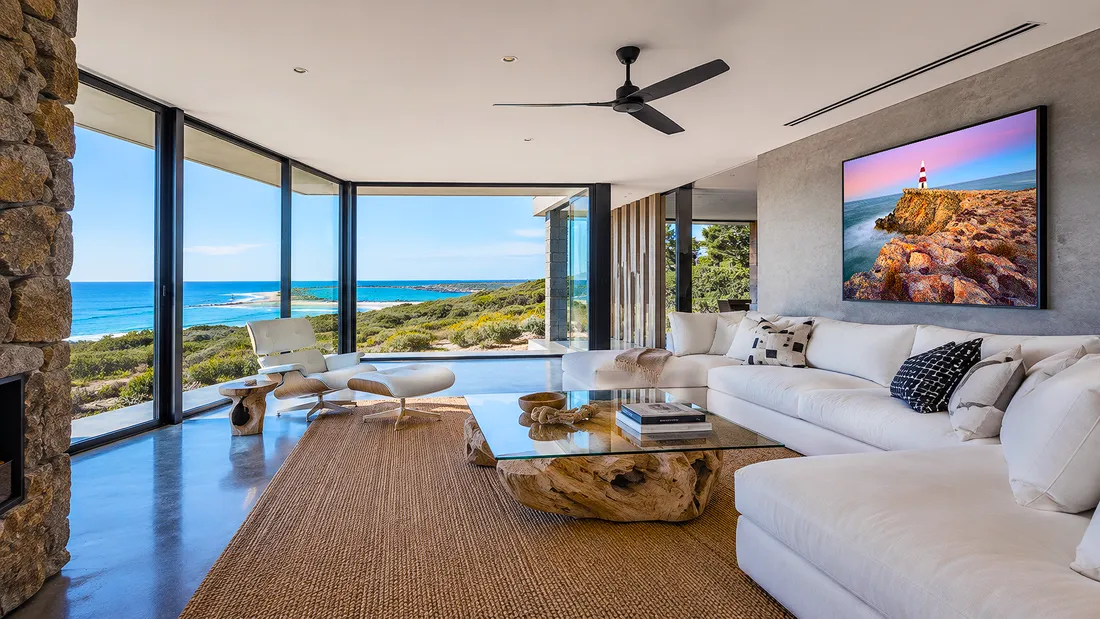
A luxury coastal Australian living room where vivid lighthouse photography adds warmth and drama to a modern interior, echoing the ocean view while creating a bold focal point above the sofa.
Certain photographic subjects naturally suit Australian interiors because they echo the way many people live here.
Coastal and beach photography works because the ocean is part of Australian visual culture. It does not have to mean obvious postcard imagery. In fact, the best coastal wall art is often quieter: soft water, open sky, morning light, beach textures, headlands, rock pools, sand, cloud and horizon.
Harbour photography works well in Sydney homes because it brings recognition and structure. Bridges, sails, ferries, skyline shapes and reflected light can add a strong sense of place without feeling rustic or casual.
Eucalyptus, bushland and Blue Mountains imagery can bring a cooler, more grounded feeling into a home. These subjects work especially well with timber, stone, linen, neutral colours and earthy interiors.
Desert and outback photography can add warmth, texture and scale. Ochre, red earth, dry grass, stone and huge skies suit interiors that need depth and character.
Sandstone works beautifully in Sydney interiors because it belongs to the city’s geology and architecture. It brings warmth without shouting. A sandstone cliff, coastal rock platform or weathered wall can sit naturally with timber floors, linen fabrics and pale walls.
City and architectural photography suits apartments, studies and more contemporary interiors. Black-and-white city prints can feel timeless, while colour cityscapes can add energy and urban polish.
Travel photography works when it feels personal, not random. A photograph of Japan, Italy, New Zealand or America can be perfect if it connects to memory, aspiration or the personality of the people living in the home.
Fine art photography should not feel like a souvenir
There is a difference between a fine art photograph and a tourist image.
A tourist image usually says, "I was here." A fine art photograph says something about light, timing, atmosphere, composition and feeling.
That difference matters in a home.
A photograph of the Sydney Opera House can be a souvenir, or it can be a study of form, reflection, weather and evening light. A beach photograph can be a holiday snapshot, or it can be an image of space, calm and colour. A landscape can be documentary, or it can become almost abstract through mist, tone, shadow and composition.
When choosing photography for your home, look for images that will still hold your attention after the first glance. The best prints reveal themselves slowly. They do not rely only on subject matter. They have structure, mood and restraint.
That is what makes fine art photography feel timeless rather than decorative.
Framing and finish matter
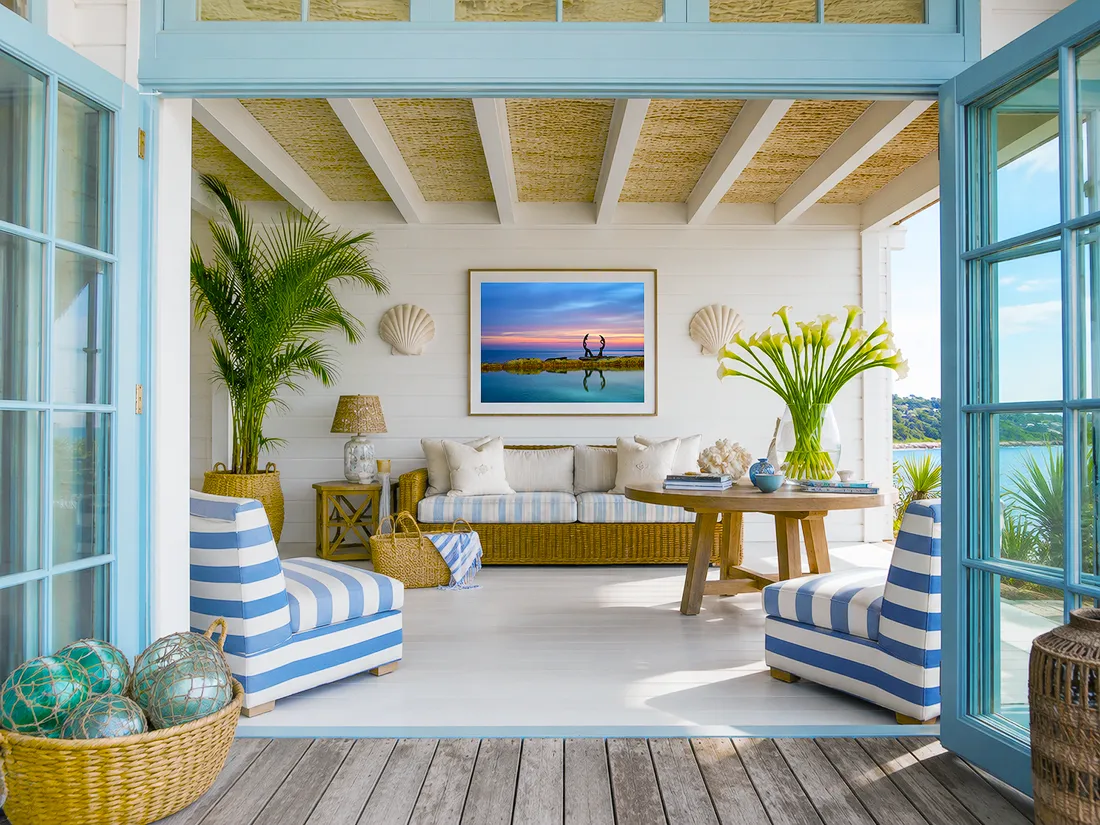
A bright Australian coastal verandah showing how colourful sunset photography can enhance a relaxed beach-inspired interior, adding warmth and atmosphere to soft whites, blues and natural textures.
The frame should serve the artwork first, then connect it to the room.
Light timber frames can work beautifully in Australian homes with oak furniture, pale floors and relaxed coastal interiors. White frames can keep a room feeling bright and quiet. Black frames add definition and work especially well with black-and-white photography or images with strong shadows. Natural timber can soften a modern room. A frameless acrylic or mounted print can feel more contemporary and gallery-like.
The finish also matters.
Glossy surfaces can create richness and depth, but they may reflect windows in bright rooms. Matte and low-reflection finishes can be easier to live with in sunlit spaces. Canvas can feel softer and more relaxed. Paper prints behind glass can feel more refined and traditional, especially with a generous mat.
For valuable photographic prints, think about longevity as well as appearance. Quality paper, pigment inks, proper framing, acid-free materials and protection from direct sunlight all help the artwork last.
The physical object matters. Wall art is not only an image file. It is something you live with every day.
How high should you hang fine art photography?
Most people hang artwork too high.
As a general starting point, the centre of the artwork should sit around eye level, often around 145–150 cm from the floor. This is not a law, but it is a useful reference point.
When artwork is above furniture, the furniture matters more than the abstract wall height. The bottom of the artwork should usually sit close enough to the sofa, bed, console or cabinet that the two feel connected.
Above a sofa, a gap of around 15–25 cm often works well. Above a bed, the gap may be slightly smaller depending on the bedhead. In a dining area, artwork can often sit a little lower because it is mostly viewed while seated.
The goal is simple: the artwork should feel related to the room and to the people using it. High ceilings do not mean the artwork should float near the ceiling. Humans do not become taller because the walls are taller.
Once you have chosen the right artwork, placement makes a huge difference. Height, spacing, furniture clearance and gallery-wall layout can completely change how a print feels in the room. For a more detailed step-by-step guide, including artwork height, scale above furniture and gallery wall arrangements, see How to Hang and Arrange Artwork at Home: A Practical Guide to Scale, Height and Gallery Walls.
Common mistakes when choosing wall art
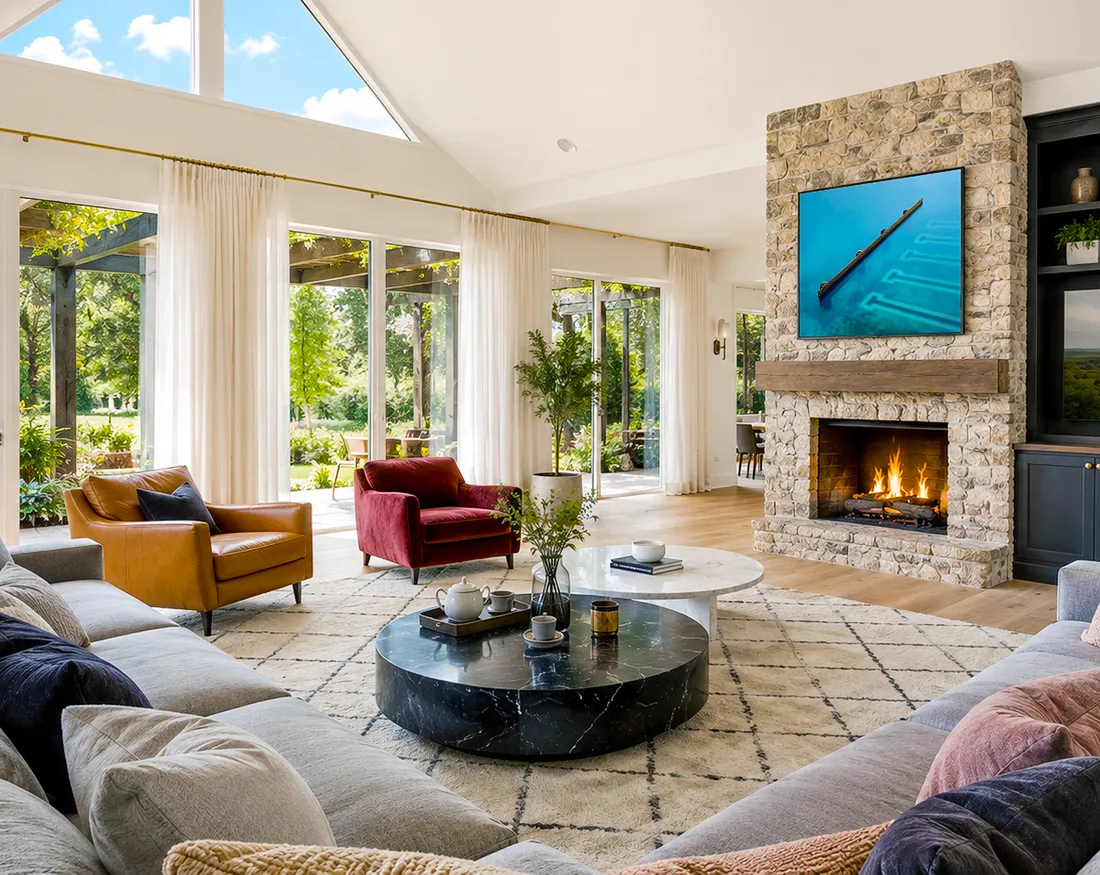
A spacious modern Australian living room showing how vivid coastal photography can introduce a fresh blue focal point, balancing warm stone, timber, leather and soft neutral furnishings.
The first mistake is buying too small. This is probably the most common problem in modern homes and apartments. A small artwork on a large wall rarely feels intentional unless it is part of a group or placed in a more intimate area.
The second mistake is matching colour too literally. If the artwork only works because it matches a cushion, it may not have enough emotional strength to last.
The third mistake is ignoring light. A print that looks beautiful online may behave differently on a wall opposite a bright window.
The fourth mistake is choosing artwork last, after everything else is finished. Art should not be treated as a leftover decision. It can shape the whole mood of a room.
The fifth mistake is filling every wall. Some walls need art. Some need space. A good artwork often looks better when it has room around it.
The sixth mistake is choosing something fashionable but emotionally empty. Trends change quickly. A print connected to place, memory, atmosphere or genuine visual pleasure will last longer.
A simple way to choose the right print
Start with the room.
Then choose the mood.
Then decide the scale.
Then think about subject.
Then choose the frame and finish.
This order prevents most mistakes.
For example, if you are choosing artwork for a bright Sydney apartment living room, you might decide the room needs calm, openness and a sense of place. That may lead you toward a large coastal or harbour photograph, possibly with soft blues, pale sky and enough negative space to breathe.
For a bedroom, you may decide the room needs quiet and softness. That may lead you toward a gentle seascape, misty landscape or minimal photograph with low contrast.
For a hallway, you may decide the space should feel more personal. That may lead you toward a series of smaller framed travel photographs, black-and-white prints or vertical works.
For a home office, you may want clarity and focus. That may lead you toward clean architectural photography, a restrained landscape or an image with strong lines and space.
The right artwork is not just the one that looks good by itself. It is the one that makes sense in the life of the room.
Final thought
A good fine art photograph should not merely cover an empty wall.
It should change how the room feels.
In Australian homes and apartments, that often means working with light, space, architecture, outdoor views and the relaxed rhythm of daily life. Sometimes the right choice is one large statement print. Sometimes it is a quiet bedroom landscape. Sometimes it is a hallway of collected memories. Sometimes it is a bold Sydney image that gives the whole living room its centre.
Start with the feeling you want the room to hold. Then choose the photograph, size, placement and frame that support that feeling.
The best wall art is not filler. It is a piece of atmosphere you choose to live with.
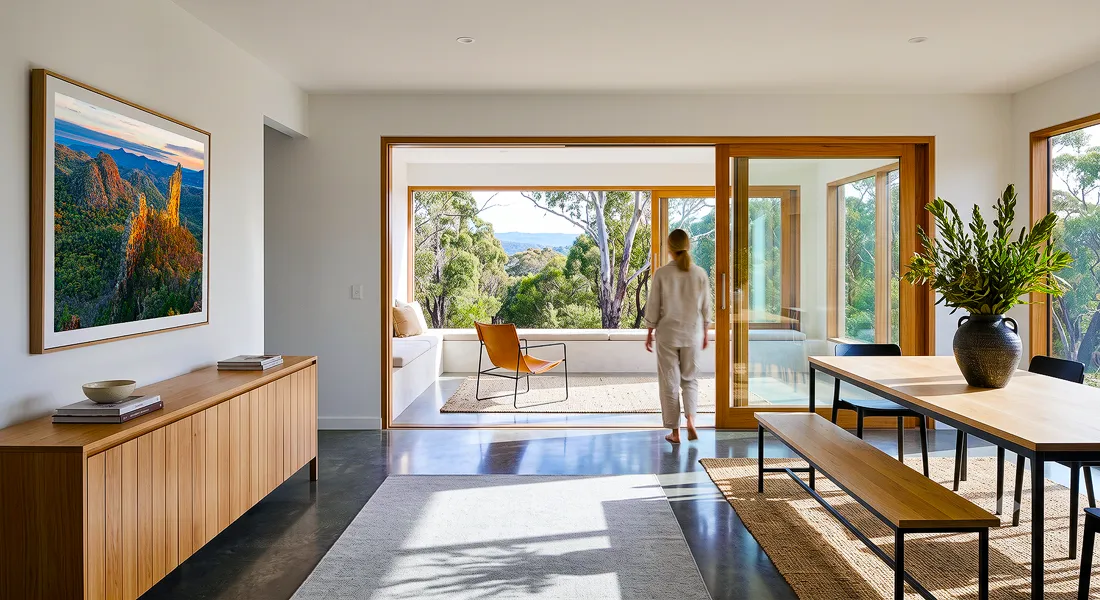
A modern Australian home showing how mountain landscape photography can bring warmth, colour and a stronger sense of place to a clean interior surrounded by native bushland.
Frequently Asked Questions
What type of wall art works best in Australian homes?
Fine art photography, coastal wall art, landscape prints, city photography and black-and-white photographs can all work well in Australian homes. The best choice depends on the room’s light, scale, furniture and mood. In many modern Australian interiors, one large photographic print can feel more confident than several small decorative pieces.
Is coastal wall art suitable only for beach houses?
No. Coastal photography can work beautifully in city apartments, bedrooms, living rooms and home offices. The key is to avoid cliché. Soft water, open sky, sandstone, headlands, rock pools and quiet beach scenes can bring calm and space into a room without making it feel like a themed beach house.
What size artwork should I choose above a sofa?
A useful starting point is to choose artwork around two-thirds of the sofa width. The artwork should usually be narrower than the sofa, but wide enough to feel visually connected to it. A print that is too small can look lost, especially in open-plan living rooms.
Should artwork match the colours in the room?
Artwork should feel connected to the room, but it does not need to match everything literally. It is usually better to choose the mood first, then consider colour. A print can either blend with the room for a calm result or create contrast as a focal point.
What kind of photography works best in bedrooms?
Bedrooms usually suit calmer images: soft coastal scenes, misty landscapes, quiet water, gentle skies, muted colours and minimal compositions. The artwork should support rest rather than dominate the room.
Can large wall art work in a small apartment?
Yes. A single large artwork can often make a small room feel more finished and spacious, especially if the image has depth, open space or a distant horizon. Several small pieces can sometimes make a compact room feel busier.
Where should I hang artwork in an apartment?
The best places are usually above the sofa, above the bed, above a console, in the entryway, along a hallway or on a narrow vertical wall. Apartments benefit from fewer, stronger pieces rather than filling every wall.
Is black-and-white photography good for interiors?
Black-and-white photography works very well in contemporary, classic and minimalist interiors. It can add structure, contrast and timelessness without introducing strong colour. It is especially effective in hallways, studies, bedrooms and rooms with a refined palette.
About the Artist
I'm Ilya Genkin - an internationally recognised Australian landscape and fine art photographer offering wall art prints. My passion for capturing the beauty of nature and our world translates into striking photographic prints that bring life, emotion, and inspiration to any space. From tranquil seascapes to dramatic mountainscapes, each image is a reflection of my vision and dedication to the art of photography.
Read more about Ilya Genkin and shop fine art prints online from his collection.
Wall Art Prints Featuring Fine Art Landscape Photography
Explore my extensive collection of wall art prints - crafted with the highest-quality materials to suit every style and budget. Whether you're looking for a luxurious, ready-to-hang piece or a beautifully printed work to frame yourself, each photograph is available in several premium formats: Gallery-quality Fine Art Paper Prints - ready for framing, and Professional Canvas Prints - classic and timeless texture.
Each artwork is meticulously printed and made-to-order to ensure you receive a piece that elevates your home, office, or commercial space. Buy fine art prints online to suit your style.
Artworks for Interior Designers, Home Stylists, and Architects
I collaborate with interior designers, home stylists, and architects to create bespoke wall art prints tailored to your project's aesthetic, colour palette and interior design needs. Prints can be customised and sized to complement your space perfectly. All pieces are made-to-order, and pricing varies based on size, quantity, and shipping.
Contact me to discuss your project and request a personalised quote.
Why Choose Ilya Genkin Photography?
By choosing my work, you're not just acquiring exceptional art - you're supporting an independent Australian artist and contributing to a vibrant local creative community. Every purchase directly helps sustain and grow this craft, bringing authentic and meaningful art into your life.
Request a free mockup to see how a chosen photograph will look in your space before you buy.
Start your journey today - shop our wall art collection, purchase with confidence, or order custom prints today and transform your walls with fine art photography.
Fine Art Landscape Photography
Information
- FAQ - Landscape Photography Prints
- Purchase Fine Art Prints
- Black and White Fine Art Prints
- Art Consultation for Your Home
- Design Tips for Styling Your Space with Art
- Limited Edition vs Open Edition Prints
- Collector Resources
- FAQ - Image Licensing
- License Stock Photos
- Stock Photo Price Request
- Materials and Sustainability
Photography Guides
Online Store Opens 24/7
Email:
Phone: +61 (0) 421 055 613

Crafted with care for the planet - using sustainable materials and eco-friendly packaging.
Ilya Genkin Photography acknowledges the Traditional Custodians of the land on which we operate, live and gather as employees, and recognise their continuing connection to land, water and community. We pay respect to Elders past, present and emerging.